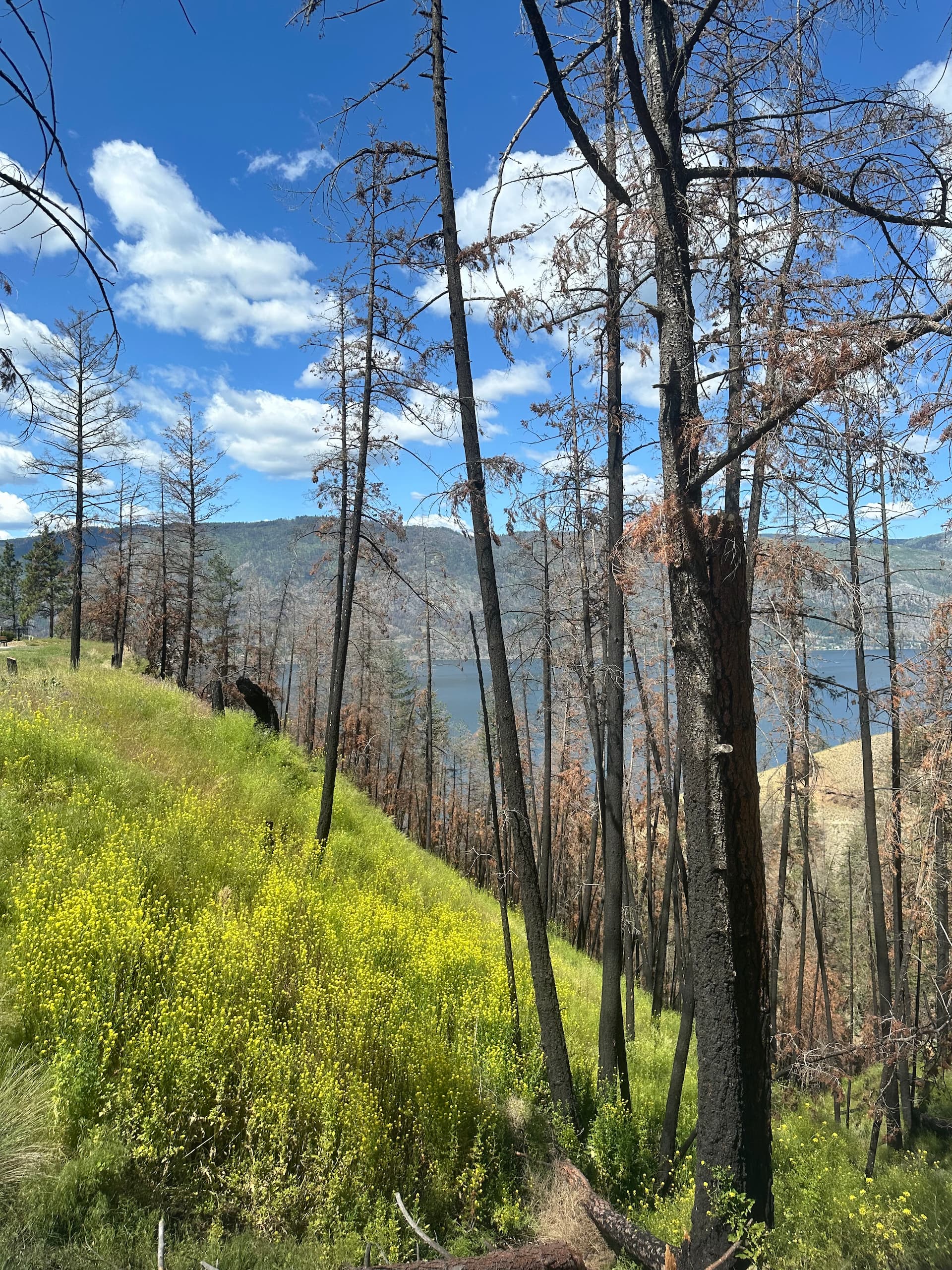
Wildfire does not move evenly across the landscape. It finds the easy fuel, the steepest angle, and the driest crowns, then rides wind and convection like a stairway. If your property sits on a slope or blends into woodland, you already know the quiet beauty also comes with a sharper risk profile. Reducing that risk, without stripping the landscape of character and ecological function, is the work of FireSmart planning paired with skilled tree care.
I have spent seasons on rope and saddle on sunbaked escarpments, and I have watched small, thoughtful changes knock down risk far more effectively than wholesale clearing. The right strategy usually combines good assessment, selective removals, disciplined pruning, and follow-through on stumps, slash, and ground fuels. On steep ground, every decision has a knock-on effect, from erosion to windthrow to access for emergency crews. This article lays out how FireSmart Tree Services can be adapted to slopes and woodlands, and where specialty services like Certified Arborist Consultation, Dangerous Tree Assessment and Removal, and Tree Cable and Bracing fit in.
Why slope changes the fire equation
Heat preheats fuels upslope. Picture a 20 percent grade above a ravine. Fire at the bottom throws convective heat uphill, drying and igniting needles and leaves ahead of the flame front. Rates of spread can double with moderate slope compared to flat terrain, and spotting from embers becomes more likely along drafts channeling up gullies. Add ladder fuels - shrubs, lower branches, stacked firewood, wood fences, or bark mulch against siding - and the path from ground fire to crown fire shortens dramatically.
On wooded slopes, wind patterns get tricky. Afternoon thermals run uphill. Morning winds may flow downslope. Together, they carry embers into niches that are hard to see from a driveway. I have found smoldering ember pockets after prescribed burns 50 to 100 meters downwind and upslope, lodged under juniper skirts and in punky stumps. A FireSmart plan must deal with those predictable pathways.
Reading a site before the saws come out
A Certified Arborist Consultation is where the work starts. The best assessments are practical, not theoretical. We walk the grade and trace the routes a fire would likely take toward structures, propane tanks, outbuildings, and evacuation routes. We look for five things: continuity of fuels from the forest floor into crowns, dead and dying stems, species with volatile resins or peelable bark, slope-driven wind channels, and places where equipment can safely work without tearing up the slope.
The small details matter. Rotten stumps wick fire for hours. A brush pile out of sight behind a shed becomes a liability on a red flag day. A tanoak or Douglas-fir regenerated thickly along a cut bank might have stems six to eight feet apart; in that density, crowns interlock and carry flame. A row of old fruit trees with low skirts over bark mulch looks harmless in spring and acts like a fuse in August. I carry a clinometer, a moisture meter, and, when needed, a drone to inspect canopies we cannot see from the ground. On slopes, you also measure runout - if a tree fails, where does it land? That changes how and whether we attempt piecemeal removals versus full dismantles.
Adapting FireSmart zones to steep and wooded ground
FireSmart principles are straightforward: reduce ignitions near structures, break up fuel continuity, and lower flame heights. In practice, slopes force adjustments. Many jurisdictions and FireSmart programs outline three management zones measured from structures. The distances are a guide, not a rule carved in stone, because slope steepens risk and often calls for wider buffers upslope.
- Zone 0 to 1 (0 to 10 meters): Keep this lean, clean, and green. On slopes, increase the effective distance uphill by several meters because flame and heat will lean into the hill. Avoid combustible mulches against siding, keep ladder fuels pruned, and maintain irrigated groundcover or mineral soil breaks where possible. Zone 2 (10 to 30 meters): Create separation between tree crowns, lift branches up from ground fuels, and remove or isolate shrubs with resinous or oily foliage. On an upslope exposure, aim for greater spacing than on flat ground. Visualize flame lengths, then make sure there is nowhere for that fire to climb. Zone 3 (30 to 100 meters and outward): Manage for overall forest health and patchy, discontinuous fuels. Thin overcrowded stands, favor large, fire-resilient stems, and clear dead and downed material selectively to break up continuity, not to create bare ground.
Those numbers describe distances, but the quality of work matters more than tape measures. A Zone 1 with tidy ground and thoughtfully pruned trees beats a wider zone choked with low branches. On slopes, the “uphill bias” helps. If you must choose where to invest effort, push your cleanup farther uphill from structures than downhill, and cut ladder fuels more aggressively upslope.
The service menu that actually reduces risk
Plenty of tree work gets marketed as FireSmart. Some of it helps, and some of it simply looks tidy for a week. The following services, used in combination and adapted to the site, consistently change outcomes in slope and woodland scenarios.
Certified Arborist Consultation: A certified arborist does more than identify species and tag dead wood. On slopes, we judge root plate exposure, lean relative to the fall line, and crown asymmetry driven by light reaching from one side. We also map how equipment can safely reach and exit without rutting and erosion. A good consult gives you a prioritized, multi-year plan so that budget can align with the highest risk reductions first.
Tree Pruning & Crown Shaping: Done correctly, pruning knocks down ladder fuels, reduces ember traps, and lowers the chance of crown fire spread between neighboring trees. The rule of thumb is conservative: remove no more than roughly 20 to 25 percent of live crown in a year on most species. Lift lower branches to two to three meters where appropriate, but do not lion-tail branches or strip foliage only to create long, weak levers that snap in wind. Crown shaping also reduces asymmetric sail on slope-facing crowns that take the brunt of uphill thermals.
Tree Removal Services: Sometimes the only safe move is to remove a tree. On steep, wooded ground, removals are typically sectional takedowns using ropes, rigging blocks, and controlled lowering. We avoid felling across the fall line unless there is a clear, protected runout and no risk to downslope structures or habitat features. Removal priorities include severe defects over structures, invasive conifers seeded thickly under power lines, and species known to torch explosively near buildings.
Dangerous Tree Assessment and Removal: Not all hazards are obvious. A cedar with an included bark crack on the uphill crotch may hold through mild weather then let go under heat and wind from a nearby fire. I have removed trees where 70 percent of the root plate was undermined by a small slip after heavy rain, invisible until we probed the soil. Dangerous Tree Assessment calls for resistograph or sounding tools when needed, but experience reading the bark and form often carries the day. When removals happen, we coordinate with erosion control and backfill immediately if roots are excavated.
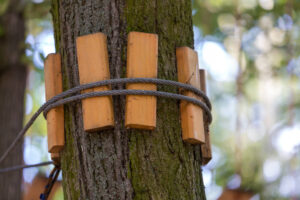
Tree Cable and Bracing: On slopes, we sometimes save a valuable tree with structural support. Cables in the upper crown redistribute load between co-dominant stems. Bracing rods installed through split unions add rigidity. This is not a cure-all and it requires inspection every year or two. In FireSmart terms, cable and brace work pays off when a well-sited, mature tree provides shade, wind moderation, and soil stabilization, and its removal would escalate erosion or open a wind tunnel toward the house.
Stump Removal & Grinding: Leaving stumps high or full of chips against a foundation creates ember catchers. Grinding stumps 15 to 30 centimeters below grade eliminates that snag. On slopes, we pack the cavity with mineral soil and, if necessary, coir logs or small wattles below the grind spot to prevent downslope washout. Chips can be repurposed carefully away from structures, but not piled deep. A thin chip layer for erosion control is acceptable 10 meters or more from buildings; within that inner buffer, we prefer rock mulch or bare mineral soil with intermittent hardscape.
Emergency Tree Services: After a wind event or when a smoldering snag threatens to fall toward an access road, response times matter. A crew that knows your site’s slope angles, anchor trees, and staging points can mobilize sooner and work safer. Preplanning access, including alternate routes if a gate is blocked by debris, is not dramatic, but it changes outcomes on the day you need it.
FireSmart Tree Services, as a wrapper, means all of the above sequenced to reduce risk with minimal ecological harm. The sequencing is what most homeowners miss. You do not start with removals because a shiny saw can make holes you cannot easily fix. You start with assessment, prune to break ladders, remove selective hazards, clean ground fuels, then reassess what remains.
Technique on steep ground: the difference between tidy and safe
Most of the mishaps I have seen on slopes happen because a crew treats them like flat lawns with trees. Steep work rewards patient rigging and low-impact equipment.
Rope work and rigging: We set primary anchors in living trees with healthy unions upslope of the work area. Blocks and friction devices let us lower pieces onto designated drop zones or into sleds for controlled descent. Taglines keep sections from penduluming into stems or structures. When stems lean downhill, we often flip the typical sequence and clear the uphill side first, then use a high anchor to swing and lower wood uphill into safe staging.
Ground access and machinery: Compact tracked loaders and small winches do more with less soil disturbance than wheeled equipment. On sensitive slopes, we hand carry with portage frames rather than skid logs. Erosion matting goes in the same day we disturb soil, not a week later. Temporary steps and rope handlines for crew safety are not theatrics; they prevent slips that otherwise turn a clean job into a rescue.
Cuts and pruning on slope-grown trees: Trees grown on incline often have reaction wood and asymmetry. That means barbinds, weighted tops, and fibers that do not behave as predicted. Face cuts and back cuts get adjusted to fiber tension. Final cuts respect branch collars to speed closure and reduce decay. I have seen hasty flush cuts rot back a meter into a hillside-grown madrone, turning a simple prune into a future hazard.
Slash management: Chips and small branches must not create a blanket that will carry fire. On steep, wooded sites, we scatter fine material thinly away from structures or remove it entirely. Larger pieces are bucked and cribbed off the ground in small, spaced stacks, not long jacks that funnel fire. If burn piles are legal, we keep them small and time them to wet seasons with permits and water on site. Where burning is not appropriate, hauling out and converting to firewood placed well outside Zone 1 is the better call.
Erosion, habitat, and aesthetics are not optional
No FireSmart plan is complete if it trades flame risk for slope failure. Root systems hold soil. Remove too many stems at once, and you change evapotranspiration and shade, which dries the topsoil and accelerates ravel. I prefer a staged approach: thin a third of the target stems the first winter, observe the slope through spring storms, then take the next third if the slope holds well. On very steep cuts, we interleave removals with plantings of native bunchgrasses and shrubs with deep root architecture. Think serviceberry, snowberry, or ceanothus where native, and avoid resin-heavy shrubs near structures.
Habitat matters, too. Snags can be left as wildlife trees, but not near structures or along evacuation routes. We de-limb and reduce height to an acceptable snag pole well away from Zone 1 and upslope channels that lead to homes. Aesthetic goals do not vanish under FireSmart. Crown shaping that opens view corridors and admits light can align with fuel reduction. When neighbors see a project that looks cared for rather than clear-cut, they are more likely to join in, which improves community-scale outcomes.
Timing the work with seasons and sapwood
Vegetation is not static. Many broadleaf trees respond best to pruning in late winter when disease vectors are low and energy reserves are ready to push callus. Pines and spruce tolerate light pruning during dry periods, but heavy cuts in drought years can stress them. Grinding stumps and backfilling before the first big fall storms helps prevent washouts. Prescriptions that call for removals on deeply saturated soils can backfire, literally causing slips under equipment weight. We schedule heavy machine work for a window when ground is firm yet not tinder dry, and we keep a weather eye for red flag warnings that change risk during operations.
Costs, trade-offs, and how to stretch a budget
Nobody has an endless budget. Sloped sites tend to cost more per tree because of rigging complexity, longer haul routes, and the need for erosion controls. As a rough guide, sectional removals on steep ground can run 1.5 to 3 times the cost of a flat-yard removal of the same size. Stump grinding on slopes adds preparation and backfill, perhaps 20 to 40 percent more than flat ground. Pruning to FireSmart specs is typically cheaper than removals and often delivers the most bang for the buck in Zones 1 and 2.
If you need to phase work, start at the house and work outward, with an eye to the uphill side. Pay first for a Certified Arborist Consultation that includes a written, prioritized plan. Next, allocate to Tree Pruning & Crown Shaping to eliminate ladders and ember traps near structures, then to Dangerous Tree Assessment and Removal for any outliers aimed at the roof or road. Save cosmetic removals or distant thinnings for later years. Always reserve a small budget slice for Emergency Tree Services, because storm timing rarely respects fiscal calendars.
Two jobs that taught the same lesson
A hillside vineyard with a cedar windbreak: The owner feared a wall of trees would tunnel fire straight to the tasting room. The cedars were overstocked with skirts touching the vineyard floor. Rather than removing the whole windbreak, we lifted crowns to three meters, thinned every third tree to open gaps, and removed a dozen small junipers that had crept in under the line. We ground stumps and armored the downslope toe with straw wattles. A year later, a grass fire ran upslope and stalled in the gaps. The tasting room never saw live flame, only embers that we had already planned for with clean gravel and metal siding on the upslope https://connermiok003.huicopper.com/certified-arborist-consultation-for-new-homebuyers face.
A lake cabin beneath a mixed conifer stand: The cabin sat 12 meters below a terrace of second-growth fir and pine. Many stems leaned downhill, and the understory was choked with young firs four to six feet apart. We could have clear-cut and called it safe, but the owner wanted shade and privacy. The plan called for removing half the understory, focusing on stems under 15 centimeters diameter, and pruning remaining trees to lift lower limbs to 2.5 meters on the uphill side. We installed two non-invasive cables in a V-shaped pine with a partial crack at the union aimed at the cabin. Stumps were ground and filled flush with mineral soil. Two summers later an ember storm from a lightning strike a kilometer away dropped embers into the stand. Surface fire crawled, did not climb, and crews defended the cabin easily from the driveway.
What homeowners can handle, and what to leave to pros
Some tasks in FireSmart Tree Services are safely within a diligent homeowner’s reach. Others need training, insurance, and the right gear. As a quick guide:
- Homeowner scale: Rake needles from gutters and roofs, replace bark mulch with gravel within a few meters of structures, relocate firewood stacks beyond Zone 1, limb small shrubs away from decks, and keep grass short and irrigated where allowed. Professional scale: Pruning live crowns on mature trees, removals on any tree near a slope break or structure, grinding stumps on grades, installing Tree Cable and Bracing, and any Dangerous Tree Assessment and Removal.
A blended approach works well. You handle the housekeeping, and a professional team with climbing and rigging chops takes on the structural work. That division saves money and aligns risk with skill.
Common mistakes on sloped, wooded properties
The most frequent error is over-thinning to bare dirt. That creates erosion, dries the soil, and often encourages flammable weeds. A close second is topping trees to reduce height. Topping invites decay and sprouts that are more flammable and weaker than the original crown. Another recurring issue is piling chips thick in Zone 1. A thin dusting is fine, but a 10-centimeter chip bed is a fire conveyor belt. Last, crews sometimes leave cut branches resting uphill under remaining crowns. Those piles look neat from the driveway and feed fire right into the canopy.
Maintenance is not optional, it is the whole plan
FireSmart work is not a one-and-done chore. The best properties I have cared for keep a simple calendar. Spring brings a gutter clean, a fast walk to check for winter damage or new deadwood, and a look at rodent or insect activity in stumps. Early summer is for touch-up pruning of small suckers and moving anything combustible that drifted back close to the house. Late summer is patrol season, with irrigation checks and a sweep of Zone 1 for stray needles. Fall is the time for larger pruning and removals when sap is down and bird nesting has tapered. Every two to three years, a Certified Arborist Consultation updates the plan and catches creeping risks before they become urgent.
Tree Cable and Bracing inspections should happen annually or after any major wind event. Stump depressions settle and may need top-up fill to avoid collecting embers and leaves. If you chipped material for erosion control, watch how water flows through those areas during the first real storm and adjust before ruts carve into the slope.
Permits, neighbors, and shared edges
On slopes above shared access roads or utilities, coordination matters as much as the cuts you make. Some municipalities require permits for removals near waterways or on steep slopes, even on private land. Check setback rules, riparian buffers, and seasonal restrictions for wildlife. If your woodland merges with a neighbor’s, invite them to a joint walk. Shared edges, treated on both sides, multiply the effect of your work and often reduce per-property cost when crews can stage once and serve two owners.
Utilities need notice when work occurs near lines. Professional crews handling Tree Removal Services around energized conductors will coordinate with utility arborists. If goat or sheep grazing is on the table for brush reduction, confirm fencing plans and plant safety, because animals do not read lists of desired species.
The core idea to keep
FireSmart on slopes is about continuity, not sterility. You are sculpting a landscape that interrupts fire’s easy paths while keeping roots in the ground and character in the view. If you bring in skilled help for the structural pieces - Certified Arborist Consultation, Tree Pruning & Crown Shaping, Dangerous Tree Assessment and Removal, Tree Cable and Bracing, Tree Removal Services, and Stump Removal & Grinding - and pair that with routine housekeeping and periodic Emergency Tree Services when weather cuts loose, you do more than pass an inspection. You give fire fewer options and give firefighters safer ones.
The properties that fare best are the ones treated with humility for the hillside itself. Steep ground is never conquered. It is managed with attention and care, year after year, in small, smart moves. That rhythm wins.
Ace Tree Services Ltd.
Name: Ace Tree Services Ltd.Address: 4656 Wallace Hill Road, Kelowna, BC
Postal code: V1W 4C2
Phone: 250-212-9593
Website: https://acetree.ca/
Hours:
Monday: 7:00 AM - 5:00 PM
Tuesday: 7:00 AM - 5:00 PM
Wednesday: 7:00 AM - 5:00 PM
Thursday: 7:00 AM - 5:00 PM
Friday: 7:00 AM - 5:00 PM
Saturday: 7:00 AM - 5:00 PM
Sunday: Closed
Open-location code (plus code): RHF8+8G Kelowna, British Columbia, Canada
Map/listing URL: https://www.google.com/maps/place/Ace+Tree+Services+Ltd./@49.8232606,-119.4337283,659m/data=!3m2!1e3!4b1!4m6!3m5!1s0x537d8b1d074815c5:0x450b88afa7a41435!8m2!3d49.8232606!4d-119.4337283!16s%2Fg%2F11ydkpnh22
Embed iframe:
Ace Tree Services Ltd. provides professional tree removal, pruning, stump grinding, emergency response, and arborist consultations for properties in Kelowna and across the Okanagan Valley.
The company works with homes, commercial properties, and municipal settings where tree work needs to be planned carefully around buildings, fences, driveways, landscaping, and other site constraints.
Based in Kelowna, the team is positioned to help nearby neighbourhoods and surrounding Okanagan communities with routine tree care and time-sensitive storm cleanup.
Customers looking for careful tree work often want a crew with certified arborist training, insurance, and a methodical approach to higher-risk removals.
Services also include dangerous tree assessment, cabling and bracing, and wildfire risk reduction tree work for properties that need longer-term planning.
To request a quote or discuss tree care options, call 250-212-9593 or visit https://acetree.ca/.
A public map listing is available to help customers confirm the business location and get directions before a site visit or estimate.
For Kelowna property owners who need pruning, removals, or emergency tree help, a local tree service can make it easier to schedule site-specific recommendations and cleanup.
Popular Questions About Ace Tree Services Ltd.
What services does Ace Tree Services Ltd. provide?Ace Tree Services Ltd. lists tree removal, stump removal and grinding, tree pruning and crown shaping, emergency tree service, arborist consultation, dangerous tree assessment and removal, cabling and bracing, and wildfire risk reduction tree work.
Who does Ace Tree Services Ltd. serve?
The company describes its work as serving homes, businesses, and municipalities in Kelowna and across the Okanagan Valley.
Is emergency tree help available?
Yes. Emergency service is listed for downed or uprooted trees, dangerous tree assessment, stabilization work, and branch cleanup. If a tree is near power lines, the safest first step is to stay clear and contact the utility provider before any tree work begins.
Do I always need a permit to remove a tree?
Not always. Permit requirements can depend on where the tree is located and whether it is near a creek, lake, steep slope, or another protected area. It is best to check local rules for the specific property before removal work starts.
How deep does stump grinding usually go?
Standard stump grinding is typically described as going about 6 to 12 inches below ground level, which is often enough for grass or surface landscaping. Deeper grinding may be possible when site plans call for it.
How much of a tree can be safely removed at one time?
That depends on the species, age, health, and structure of the tree. In practice, good pruning is usually about removing the right limbs for health, clearance, and structure rather than chasing a fixed percentage.
What are common signs that a tree may be dangerous?
Large dead limbs, visible cracks, a new lean, root damage, canopy dieback, or storm-related damage can all be warning signs. Trees near structures deserve extra attention when any of those issues appear.
What is cabling and bracing in tree care?
Cabling and bracing are support systems used to reduce the risk of failure in trees with structural weaknesses that may still be worth preserving. They are generally used to add support, not to replace good assessment and ongoing maintenance.
How do I contact Ace Tree Services Ltd.?
Call 250-212-9593.Website: https://acetree.ca/.
Landmarks Near Kelowna, BC
Downtown KelownaThe downtown core is a practical reference point for lakefront neighbourhoods, mixed-use streets, and central residential properties. If your property is near downtown, tree pruning, removals, and cleanup can be planned around tighter access and nearby structures.
Knox Mountain Park
This well-known park north of downtown is a recognizable landmark for nearby homes and hillside properties. If you are close to this area, ask about tree assessment, trimming, or removal work suited to sloped sites.
Mission Creek Greenway
The greenway runs through several parts of Kelowna and is a useful landmark for nearby residential areas. If your property borders or sits near this corridor, site-specific tree planning is especially important.
Pandosy Village
Pandosy is one of Kelowna’s most recognizable neighbourhoods and a common reference point for south-central properties. If you are nearby, request help for pruning, removals, or storm cleanup around homes and small commercial sites.
Rutland
Rutland is a major east Kelowna neighbourhood with a mix of residential and local commercial properties. If you are located in or near Rutland, tree work can be scheduled for both routine maintenance and urgent situations.
Landmark District
This central business-focused area is a practical landmark for offices, service properties, and nearby residential streets. If your site is near the district, ask about careful tree work around parking, access lanes, and built-up lots.
Kelowna’s North End
The North End sits on the edge of downtown and is a useful reference for nearby homes, industrial sites, and commercial properties. If you are in this part of the city, request tree care based on the layout and constraints of the lot.
Airport District
The Airport District is a recognizable north Kelowna reference point for surrounding properties and access routes. If you are in this area, ask about tree services for residential acreage, commercial sites, or roadside cleanup needs.
Glenmore & Dilworth
These established Kelowna neighbourhoods are useful landmarks for central and north-central service calls. If your property is nearby, pruning and removal work can be tailored to mature trees and established landscapes.
Highway 97 Corridor
Highway 97 is one of the city’s main travel routes and a common way to describe location within Kelowna. If your home or property is just off the corridor, a clear landmark reference can help speed up quote scheduling and site planning.